
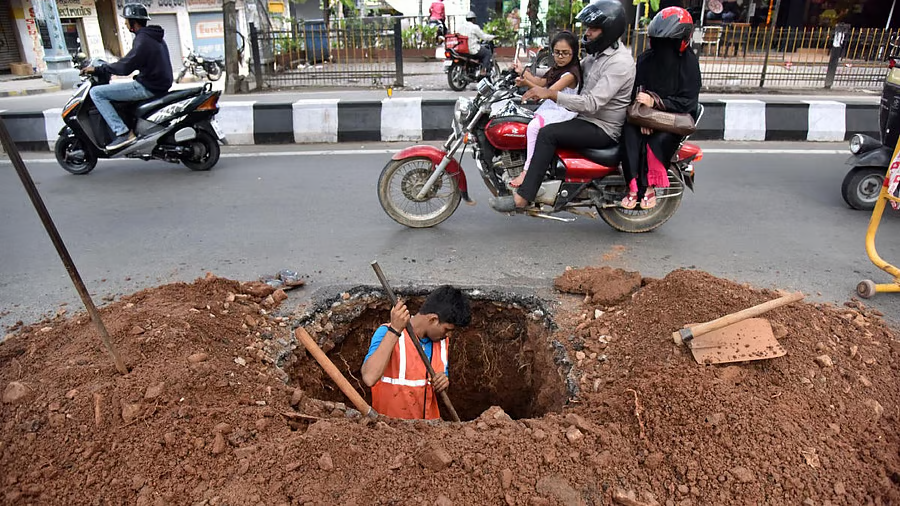
By deploying robotic units directly into underground networks, BWSSB surveyed over 32 km of infrastructure and identified critical faults without digging up roads.
The Bangalore Water Supply and Sewerage Board (BWSSB) has used robotic technology to detect leakages and inspect underground pipelines at nearly 399 locations across the city over the last six months.
The initiative has helped avoid road cutting and the inconvenience caused to the public. Officially launched in November 2025, the initiative was introduced to address pipeline leaks and sewerage faults without disrupting city traffic.
By deploying robotic units directly into underground networks, the board surveyed over 32 kilometres of infrastructure and identified critical faults without digging up roads.
BWSSB will soon inaugurate Asia’s largest water and sewerage monitoring command centre .
BWSSB Chairman Ramprasat Manohar V said that earlier, road cutting was unavoidable to detect such faults, but the new technology has changed that.
“We understand how frustrating road excavations can be for motorists and the public in a metropolis like Bengaluru. Previously, digging up entire stretches of roads was inevitable to detect pipeline leaks or sewerage faults, leading to massive traffic jams. Following the directives of Deputy Chief Minister D K Shivakumar, we deployed this robotic technology. These machines travel inside pipelines and accurately pinpoint faults without the need for surface digging, sparing the public significant hardship,” he said.
According to the BWSSB, of the 404 complaints received from the public over the last six months, 399 were resolved using robotic technology. The remaining five complaints are being addressed on a priority basis.
Source: