
Industrial Facility Data-Driven Sewer & Storm Water Network
| Endobot
Pune
PROJECT OVERVIEW
An internal condition assessment was required for the sewer and stormwater network at an industrial facility in Pune. The objective was to identify why wastewater was not fully reaching the STP and locate hidden defects affecting conveyance. Solinas inspected and digitally mapped ~1,910 m of 150–700 mm RCC/PVC pipelines through existing access points.
PROJECT OVERVIEW
An internal condition assessment was required for the sewer and stormwater network at an industrial facility in Pune. The objective was to identify why wastewater was not fully reaching the STP and locate hidden defects affecting conveyance. Solinas inspected and digitally mapped ~1,910 m of 150–700 mm RCC/PVC pipelines through existing access points.
TECHNOLOGY USED
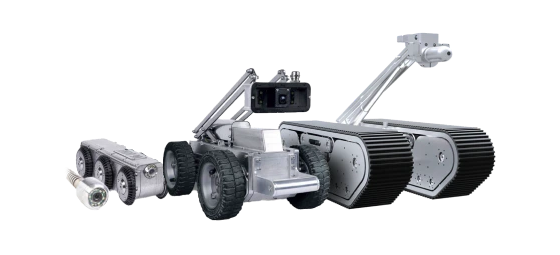
Endobot series and Endo Cam for sewer and storm-water inspection GIS-based pipeline mapping and geo-tagging Video recording and internal condition assessmentAI Powered Defect severity grading and risk classification
PROJECT EXECUTION
The network had suspected blockages, leakages, structural damage, misalignments and conveyance loss before the STP, creating uncertainty around why wastewater was not reaching the treatment system as expected. Conventional diagnosis would have required blind excavation, manual assumptions and repeated site checks. The storm-water lines also needed preventive inspection to assess monsoon-readiness and identify risks before flooding or drainage failures occurred. Solinas deployed Endobot series and Endo Cam systems through existing access points for robotic inspection of both sewer and storm-water pipelines. Each stretch was video recorded, geo-tagged and GIS mapped, with defects graded from Severity Grade 1–5, risk-rated and classified as Low, Medium or High Risk. The final output helped the client locate failure hotspots, understand STP inflow loss and prioritize desilting, repair and rehabilitation activities.
FINDINGS & IMPACT
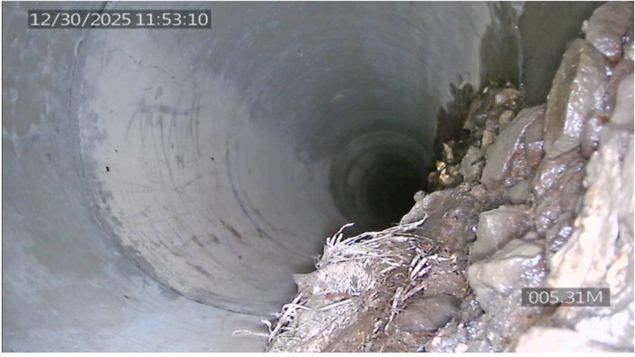
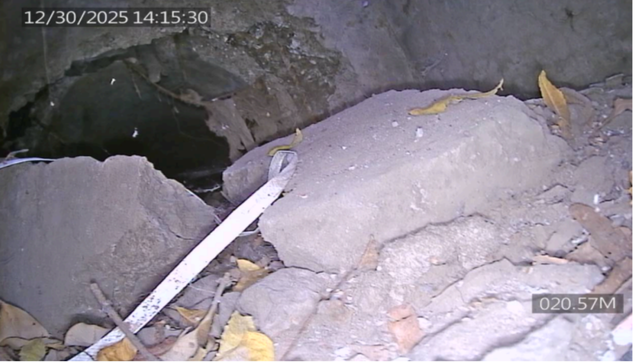
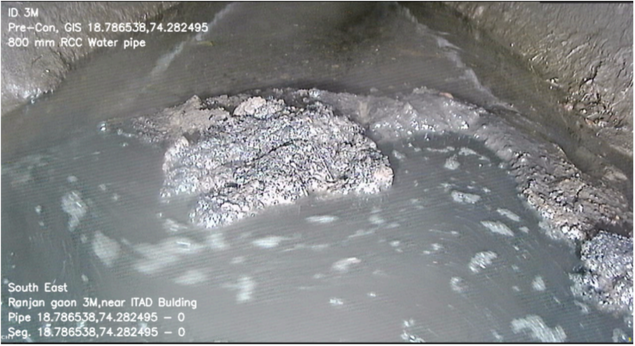
Inspection revealed heavy sludge, complete blockages, joint displacement, cracks, root intrusion, pipe damage and gas-related deterioration. Several stretches had no internal visibility. Storm-water lines showed stone, plastic and debris accumulation, joint damage and surface deterioration, indicating potential monsoon drainage risks.
1.9 KM
of sewer and storm drains network inspected
90%
of critical sewer stretches showed severe blockages
PROJECT BENEFITS
Clear STP Inflow Diagnosis: The inspection explained the loss of sewage before it reached the STP. Targeted Rehabilitation: High-risk stretches and complete blockage points were clearly identified, enabling focused desilting, repair and rehabilitation. Storm-Water Risk Mapping: Sediment, debris and damaged sections were mapped to support preventive maintenance before monsoon. Digital Maintenance Baseline: The GIS report created a reliable baseline for future asset management and maintenance planning.