
Robotic Stormwater Drain & Pipeline Inspection for Monsoon-Ready Networks
Detect silt build-up, blockages, structural defects, illegal discharge and flooding risk points using robotic CCTV inspection and AI-powered condition assessment with minimal excavation.
1000+ Km
Underground pipeline network digitally mapped
30+ cities
Water infrastructure projects delivered across India
5X
Lower inspection costs with minimal excavation
India’s Leading StormWater Pipeline Inspection Expert
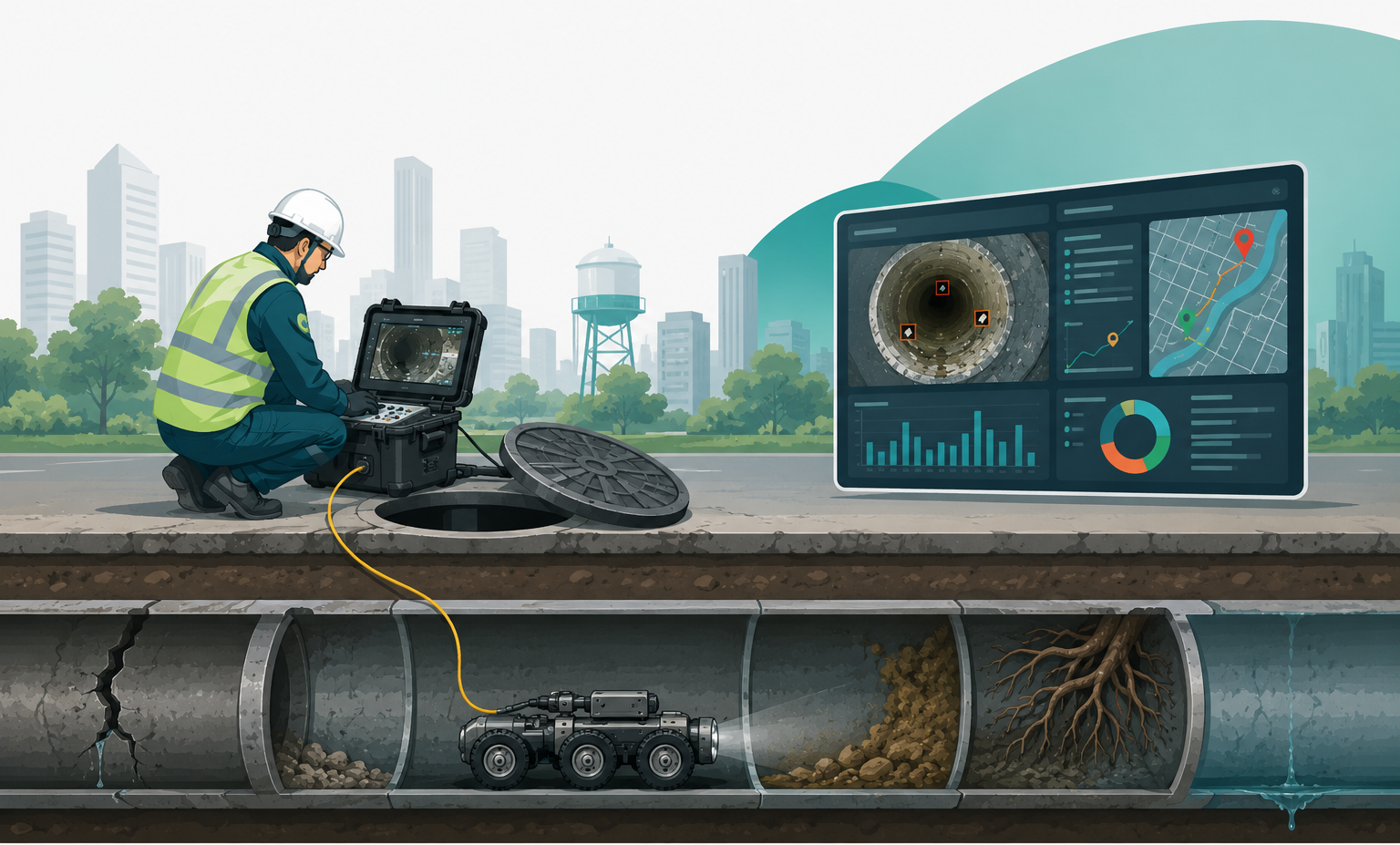
Solinas helps cities and industrial facilities understand the condition of stormwater drains before hidden issues become urgent. Our robotic inspection systems capture footage inside drains and culverts to identify silt and debris buildup, blockages, root intrusion, damaged joints, deformation and collapsed sections that reduce drainage capacity.
AI-assisted analysis and location-linked reporting show which stretches need cleaning, repair or closer assessment, supporting practical maintenance plans ahead of the monsoon. Where water levels limit visibility, sonar can help assess submerged sections, while GPR may support the location and mapping of buried infrastructure when appropriate. These findings help teams prioritise work across the network and address known restrictions before heavy rainfall.
Why Do Stormwater Drains Fail?
Drain ageing & ground movement

Tree root intrusion into culverts
Silt & debris accumulation
Illegal discharge & cross connections
Encroachments along drain alignment.
Corrosion & collapsed sections
Defects We Detect
Cracks & fractures
Drain crack detection flags early structural weakening.
Drain collapse
Collapse detection ahead of a road or ground failure.
Broken & open joints
Joint separation that admits roots, soil or infiltration.
Deformation & ovality
Drain deformation signalling bedding or loading failure.
Offset joints
Misaligned sections restricting flow and trapping debris.
Corrosion
Surface deterioration reducing remaining structural life.
Debris blockage
Plastic waste, silt and construction debris choking flow.
Silt accumulation
Buildup that steadily reduces drain capacity ahead of monsoon.
Root intrusion
Root intrusion detection before flow is fully obstructed.
Illegal discharge
Illicit connection detection for unauthorised discharge into storm lines.
Obstructions & intrusions
Foreign objects or service intrusions blocking the bore.
Standing water
Indicates sag, blockage or inadequate gradient.
Reduced flow capacity
Cross-section loss from silt, debris or deformation.
Localised flooding risk points
Segments most likely to surcharge in a heavy storm.
Backflow indicators
Signs of surcharge or reverse flow under wet weather.
Poor gradients
Flat or reverse-graded sections that trap flow and solids.
Cracks & fractures
Pipe crack detection flags early structural weakening.
Pipe collapse
Collapse detection ahead of a road or ground failure.
Broken & open joints
Joint separation that admits soil, roots or contamination.
Deformation & ovality
Pipe deformation signalling bedding or loading failure.
Offset joints
Misaligned sections restricting flow and risking leakage.
Corrosion & scaling
Surface deterioration reducing remaining structural life.
Active leaks
Leak-pinpointing flags flow-loss points before they surface.
Contamination ingress
Contamination checks flag intrusion points along the bore.
Sediment & scaling buildup
Deposits that reduce hydraulic capacity and water quality.
Illegal connections
Illegal connection detection for unauthorised tie-ins.
Obstructions & intrusions
Foreign objects or service intrusions blocking the bore.
Pressure loss zones
Indicates a leak, blockage or undersized section.
Reduced flow capacity
Cross-section loss from scaling, sediment or deformation.
Partial blockage
Blockage detection before it disrupts supply pressure.
Air-lock indicators
Signs of trapped air reducing effective flow.
Poor gradients
Flat or reverse-graded sections that affect flow distribution.
Technologies Used for Industrial Pipeline Inspection
EndoBot Variants
Robotic CCTV inspection across different pipeline diameters and access conditions, capturing direct internal footage of visible defects, obstructions and pipeline condition.
Sonar
Supports inspection where sections are submerged or visual visibility is limited, helping assess internal geometry and conditions below the waterline.
Ground Penetrating Radar
Helps locate buried pipelines and understand surrounding underground context from the surface, supporting inspection planning before physical intervention.
Acoustics
Uses sound and vibration-based signals to investigate possible leakage points where visual inspection alone may not provide sufficient information.
Beyond CCTV Inspection
How the Stormwater Pipeline Inspection Works
Network assessment
Review GIS records, pipe age, material, diameter and the reported issue.
Robot deployment
Launch the crawler at the identified manhole or access point.
Internal inspection
Capture continuous CCTV footage with chainage-referenced location data.
AI defect analysis
Swasth AI classifies and codes structural, operational and hydraulic defects.
GIS mapping
Findings are plotted against the network's geospatial asset layer.
Maintenance recommendations
A ranked plan for cleaning, point repair or lining.
What We Find Inside Pipelines
Real inspection footage captured from inside pipeline networks.
Stormwater Drainage: From Hidden Pipes to Clear Pathways
FAQs
What is robotic stormwater drain inspection?
A robotic crawler carries a CCTV camera through the storm drain or culvert, capturing continuous footage that’s reviewed and AI-coded for structural defects, silt buildup and blockages with minimal excavation.
What drain diameters can be inspected?
Our Endobot line-up covers stormwater drains and culverts from approximately 150 mm up to 2,700 mm, including large box culverts.
Can drains be inspected during light rain or residual flow?
Yes, within limits. Feasibility depends on flow depth, velocity and diameter; heavily surcharged sections may need a sonar-based approach instead of CCTV.
Can root intrusion and silt buildup be detected?
Can inspection support pre-monsoon planning?
Yes — every defect is severity-ranked and mapped so it feeds directly into a desilting, repair or lining priority list ahead of the monsoon.
How are defects prioritised?
Swasth AI assigns a condition score per segment based on defect type, severity and frequency, then ranks flood-prone segments for action first.
Do you provide GIS reports?
Yes. Findings are delivered as GIS-linked layers that plug into the utility’s existing asset-management system.
Can combined sewer-drain systems also be inspected?
Yes — the same robotic CCTV and AI workflow applies to combined systems, sewer lines and industrial site drainage.
How much drain length can be inspected per day?
This depends on diameter, access and flow condition; our team provides a daily-progress estimate during scoping.
Do you follow PACP / NASSCO-style coding?
Defect classification is structured to align with NASSCO-style PACP and MACP conventions where the engagement requires it.
How much does stormwater inspection cost?
Cost depends on diameter, length, depth, access, desilting needs and reporting scope. Share your network details for a scoped estimate.
Which regions does Solinas serve?
We work with municipal utilities and industrial clients across India, with engagements extending internationally on request.
Built for Every Sector With Critical Pipelines

Municipal Corporations

Manufacturing

Automotives

Real Estate

Pharmaceuticals

Oil & Gas

Mining & Minerals

Food & Beverage

Chemical Processing

Construction

Petrochemicals

Steel & Iron

Special Economic Zone (SEZ)

Airports

State Infrastructure
Stop Guessing.
Start Knowing.
What's Inside.
Every day without an inspection is a day a leak, blockage or crack goes undetected. Our team is ready to mobilise within 48 hours of confirmation.