
Automotive Plant Robotic Sewer Inspection for Hardened Sludge
| Endobot
Tamil Nadu
PROJECT OVERVIEW
An automotive manufacturing facility in Oragadam, Tamil Nadu required interim inspection of a 14-year-old sewer pipeline. Solinas inspected an 18.01 m stretch of 150 mm UPVC sewer line to identify flow obstruction, assess pipe-joint condition and recommend corrective action.
TECHNOLOGY USED
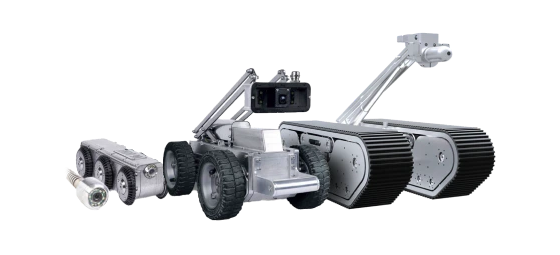
EndoCam with PTZ capability for 360-degree visual inspection GIS mapping and defect localization Defect coding and severity grading framework via SWASTH
PROJECT EXECUTION
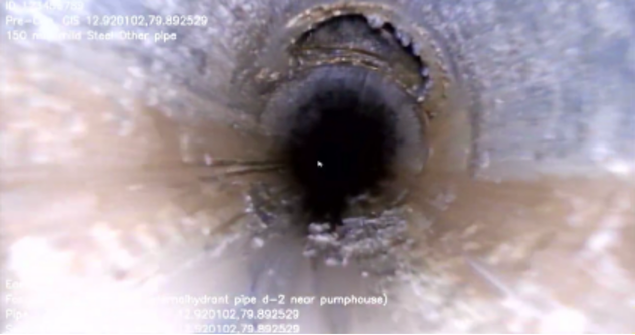
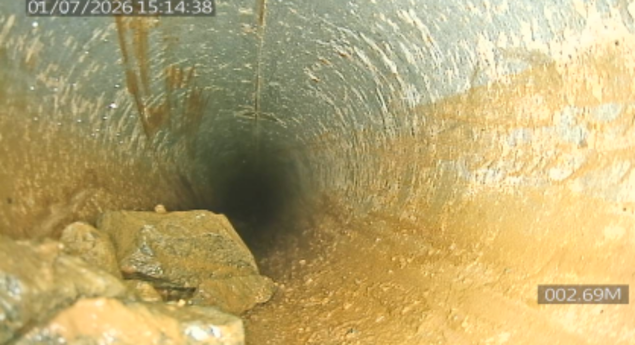
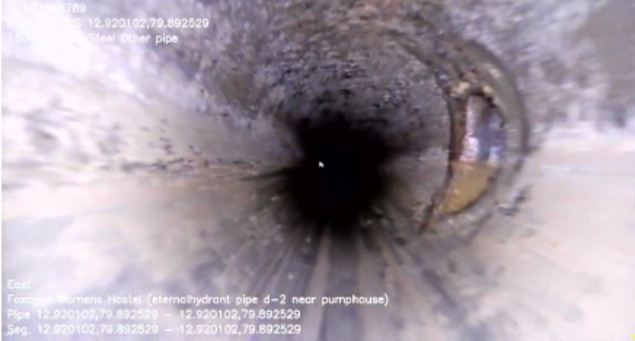
The targeted sewer segment had suspected operational inefficiency due to internal obstruction, high sludge accumulation and limited visibility. Solinas deployed EndoCam with PTZ capabilities which enabled better internal visual assessment of the 150 mm sewer line. The inspection captured internal visuals and recorded pipeline attributes, GPS location, inspection length and defect position with distance references. In several stretches, sludge levels exceeded 60% of the pipe diameter, restricting camera visibility and making obstruction diagnosis a key focus of the assessment.
FINDINGS & IMPACT
High sludge accumulation was the major inspection challenge, with sludge levels limiting visibility across multiple stretches. Two pipe joints were observed in good condition, while a hardened sludge blockage was identified at one section. The sludge pattern indicated soil and construction-material accumulation, creating risks of restricted flow, pressure buildup, system inefficiency and potential pipeline damage. Solinas recommended observing the blockage from both ends and removing it through high-pressure hydrojetting. 60% sludge blockage in several sections
60%
sludge blockage in several sections Automotive Plant Robotic Sewer Inspection
100%
Pipeline Condition Assessment
PROJECT BENEFITS
Precise Blockage Localization: Identified the obstruction point with distance-based evidence. Enhanced Internal Visibility: Improved visual assessment in a sludge-heavy sewer line. Risk-Based Maintenance Planning: Provided severity grading and defect coding for prioritization. Targeted Cleaning Readiness: Recommended focused cleaning based on inspection evidence.