
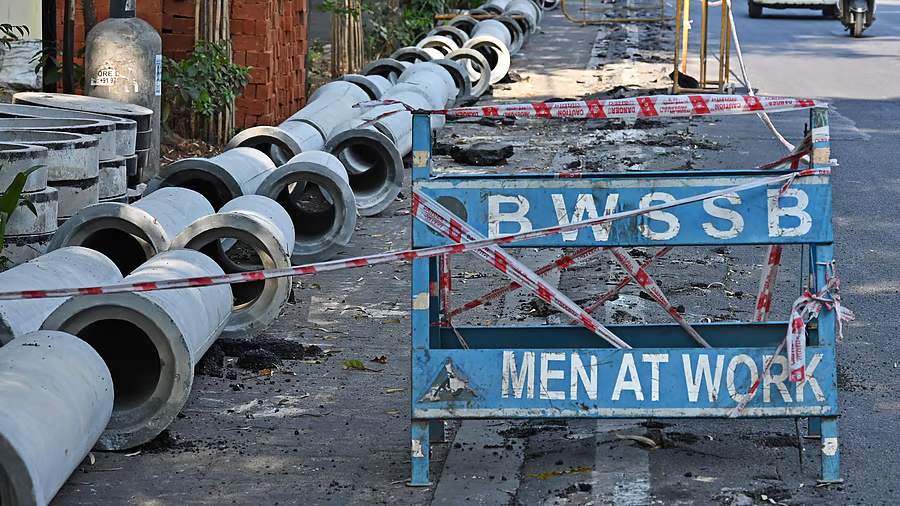
Bengaluru is facing a major water infrastructure challenge as a significant portion of its underground pipeline network continues to age. According to a Deccan Herald report, around 4,800 km of Bengaluru’s 10,000 km water supply network was laid nearly 50–80 years ago, contributing to concerns around leakage, contamination risks and recurring maintenance requirements.
To address these challenges, the Bengaluru Water Supply and Sewerage Board (BWSSB) is using robotic technology to identify and pinpoint water pipeline leakages, while also exploring AI and other technologies to determine which pipelines should be prioritised for replacement.
The report notes that Bengaluru’s unaccounted-for water has remained around 30–35%, highlighting the need for better visibility into the condition of underground assets.
Rather than relying only on large-scale replacement, pipeline condition assessment can help utilities understand where defects and deterioration are occurring, identify high-risk sections and prioritise interventions based on actual network condition. The growing use of robotics and AI demonstrates how technology can support more targeted, data-led management of ageing urban water infrastructure.
Topics: Aging Water Pipelines, Robotics, AI for Water
Read the full Deccan Herald article:
Bengaluru’s 4,800-km-long problem: City’s water pipelines laid nearly 50 years ago