
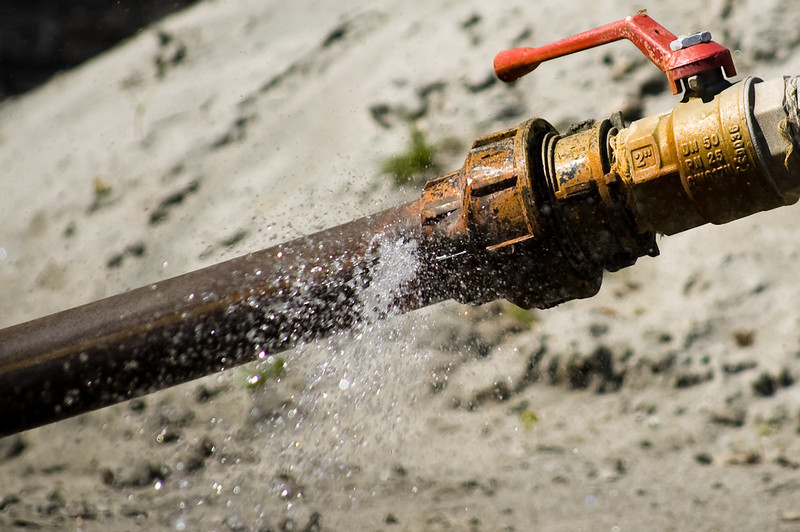
Around 45 litres of water is wasted per capita per day in Indian households due to leakages. And fixing leaks is expensive and time-consuming. Can we do it better?
It’s Shaswata for Green Margins this week.
India’s first-ever water bodies census is one of the most important reports to come out of New Delhi’s policy corridors in the recent past, and it lays bare some stark realities.
Released by the Union Ministry of Jal Shakti last month, the census defines a waterbody as any “natural or man-made” water storage structure with “some or no masonry work”. And it shows India has massive capacity for freshwater resources—some 2.4 million water bodies, over 300,000 of which are capable of holding more than 10,000 cubic metres of water.
But not all of them can be put to public use. According to the census:
- more than 50% are privately owned
- 1.6% encroached upon
- and 16.3% not in use for various reasons, from simply drying up to being damaged beyond repair
On top of this, their distribution is also highly skewed; only 3% of water bodies are concentrated in urban areas, which host about 34% of India’s population. By 2030, this number could hit 600 million, or over 50%. And whatever reservoirs India’s cities have right now are barely being utilised—nearly 65% of their water bodies are either half full or less.
A World Bank brief released earlier this year sums things up pretty well:

In fact, UNESCO thinks India’s urban population will be the “most severely affected” by water scarcity by the time 2050 rolls around.
Safe to say, then, that efficient and intelligent distribution of scarce water resources should be among India’s greatest priorities.
But the vast majority of water supplied to urban areas gets there through pipes.
And pipes leak. A lot.
We don’t have an estimate for India, but worldwide, economic losses due to non-revenue water (i.e., water lost due to leakages before it reaches the consumer, and hence can’t be billed) are massive. About US$141 billion per year worldwide, according to the World Bank, with a third of that occurring in developing countries.
Given that monitoring the thousands and thousands of miles of India’s pipelines—much of it underground—would require immense mobilisation of manpower, how do we stop them from bleeding?
Solinas Integrity, a technology startup, says it may have an answer.
A tiny 8-centimetre robot.
A matter of cost vs benefit
Endobot, which is what Solinas has named its product, is small for a reason. It is designed to get into pipelines and scout for leaks and damages. The company says the device can inspect pipes with a range up to 500 metres from the point of entry on either side, as long as they are wider than 50 mm (or 5 cm).
The question, of course, is whether the solution makes economic sense for municipalities and water utilities.
Take a hypothetical scenario: you start getting contaminated water at home and realise it’s probably due to a leak somewhere outside your house. You call the local authorities and they randomly start digging around until they figure out where the problem is.
That, in a nutshell, is what Endobot is designed to prevent. Trial and error, and the time and cost (sometimes involving days of labour from multiple workers) that is wasted on the process. Not to mention all the water leaking away in the meantime.
Purnanjali Chandra, Program Associate-Urban Water Resilience, at the World Resources Institute India, tells me such wastages are actually very high—“approximately 45 litres of water are wasted per capita per day in Indian households owing to leakages”.
Endobot can substantially reduce these costs, says Solinas CEO Divanshu Kumar.
There is no random digging involved, and repairs are initiated only once the problem has been detected.
Endobot serves two functions: defect detection and condition assessment.
“There are pressure sensors that can detect pressure drops in underground pipelines. If the pressure is unusual somewhere, the understanding is that the problem lies within the 100-200 metres range. This is how we conduct defect detection, and action is taken accordingly,” says Kumar.
For condition assessment, too, Solinas doesn’t have to check the entirety of the network under scrutiny.
Endobot uploads its data onto Solinas’ cloud-based dashboard during inspections, which is then used to analyse how a particular portion of the pipeline has degraded over a period of time. The startup says it can use this to assess the risk profile of the pipeline network.
“Municipalities lose anywhere between Rs 10-20 lakh (US$12,000-24,000) per month, just in labour, operations and maintenance,” says Kumar, claiming that employing their services would be a much cheaper, time-saving, and self-sustaining alternative.
So what do Endobot’s basic services cost?
Municipalities need to cough up around Rs 4 lakh (US$4,800) as monthly recurring costs. And if they want additional features like mapping software, total costs can shoot up to as much as Rs 7 lakh (US$8,500).
I asked Kumar if he believed smaller Indian towns would have access to (or be willing to spend) such budgets, but he says employing Solinas’ technology would save them 3X their current costs. Also:
Solinas’ rates are set about 50% lower for smaller towns, as operational costs are much lower. But in the long run, Kumar hopes that water utilities would be able to buy their own Endobots and have their own engineers handling operations, reducing their costs even further.
Granted, focusing only on the leaky supply side of India’s water crisis isn’t going to fix everything. We need a more holistic approach, with the objective of improving the resilience of entire water systems. “Aside from water supply, water-based ecosystems, particularly in urban areas, can provide multiple co-benefits such as flood mitigation, aquifer recharge, microclimate control, etc,” says Samrat Basak, Program Director, Urban Water Resilience, World Resources Institute India. And while the government is making water sector investments a priority, through schemes such as the Jal Jeevan Mission (Rural and Urban) or even AMRUT 2.0, a more diverse range of funding sources need to be tapped.
As long as there are water pipes, though, there are certainly going to be water leaks. And the need for a cheap way to fix them.