
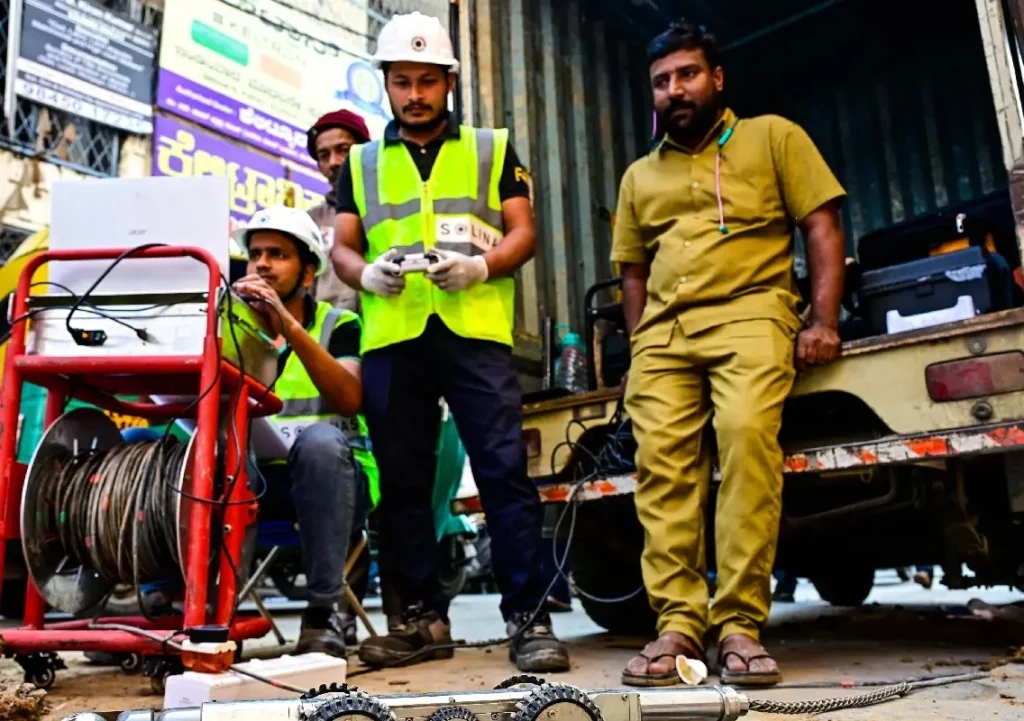
In a major step towards smarter urban infrastructure management, the Bangalore Water Supply and Sewerage Board (BWSSB) has successfully used robotic technology to detect underground pipeline and drainage defects across Bengaluru without extensive road excavation.
According to BWSSB officials, the robotic inspection system surveyed nearly 32.66 kilometres of underground pipelines over the past six months and helped avoid major road digging at 399 locations across the city.
Authorities said the initiative significantly reduced inconvenience for commuters by preventing large-scale excavation works that usually contribute to Bengaluru’s traffic congestion.
Advanced robots inspect pipelines underground
The robotic system was launched in November 2025 by D. K. Shivakumar as part of efforts to modernise pipeline inspection and sewer maintenance operations.
BWSSB Chairman Ram Prasath Manohar said the technology has helped identify underground defects accurately while causing minimal disruption to roads and public movement.
The robots reportedly travelled over 32,661 metres inside underground pipelines and drainage systems, conducting scientific inspections and locating faults with precision.
Nearly 400 defects repaired
Officials stated that the robotic inspections identified 399 separate defects, all of which were rectified with minimal damage to roads and surrounding infrastructure.
Out of 404 complaints received after the deployment of the robotic system, BWSSB said 399 complaints have already been resolved successfully within six months, while the remaining issues are being addressed on priority.
Focus on citizen-friendly technology
BWSSB officials said the use of robotic systems reflects the agency’s commitment to improving civic services while reducing disruption to traffic and public life in Bengaluru.
The Water Board added that more modern and citizen-friendly technologies are expected to be introduced in the future to strengthen Bengaluru’s urban infrastructure management.
Source: