
Insights From Solinas
By Devi, Team Solinas
It’s 6:30 in the morning. A busy city road is suddenly flooded because an underground pipeline has burst overnight.
Repair teams arrive only to discover that the pipeline had been showing warning signs for months through small leaks, pressure drops, and gradual corrosion.
This is how most pipeline failures happen, not suddenly, but over time.
Yet many utilities identify problems only after operations are disrupted. That is why robotic pipeline inspection today is no longer just maintenance; it is essential for preventing failures, reducing risk, and improving operational reliability.
Why does the right pipeline inspection method matter?
Reactive maintenance, waiting for a failure, and then inspecting is common. It leads to higher repair costs, unavoidable service disruptions, public complaints, operational downtime, and safety risks.
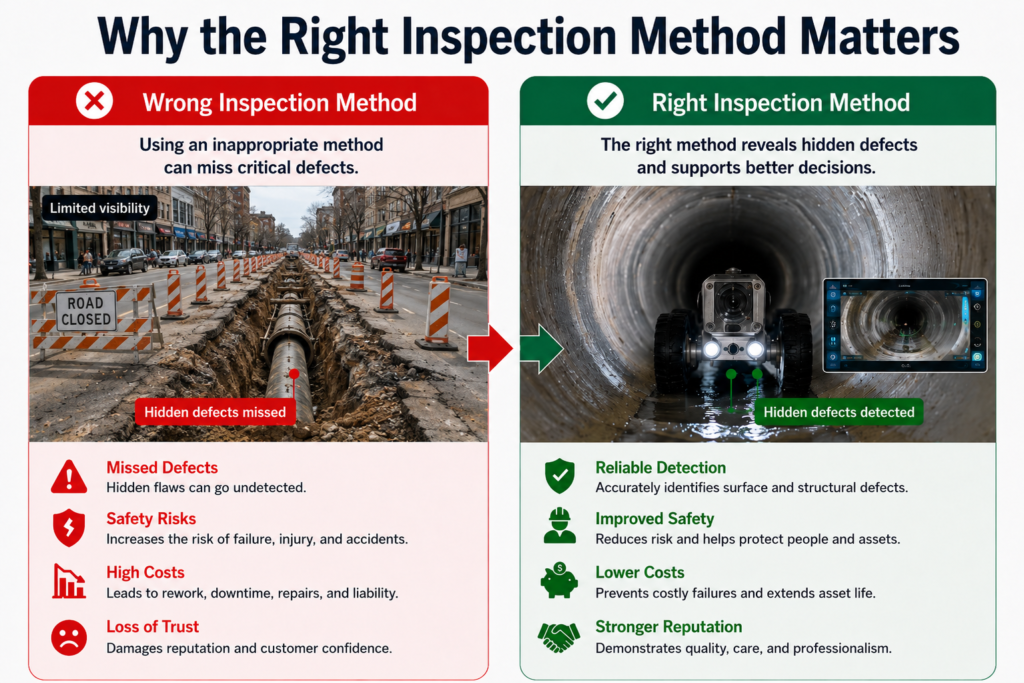
A right-fit inspection strategy helps you:
- Detects faults early, before service is affected.
- Reduce unnecessary excavation and traffic disruption.
- Optimize maintenance schedules and budgets.
- Extend pipeline life and improve worker safety.
At Solinas, we often hear the misconception that “some inspection is better than none.” In practice, inspection becomes valuable only when the method matches the pipeline’s condition, environment, and inspection goals.
Understand the pipeline before choosing a method
Different pipeline types face distinct challenges. Match the technology to the risk and the operating constraints.
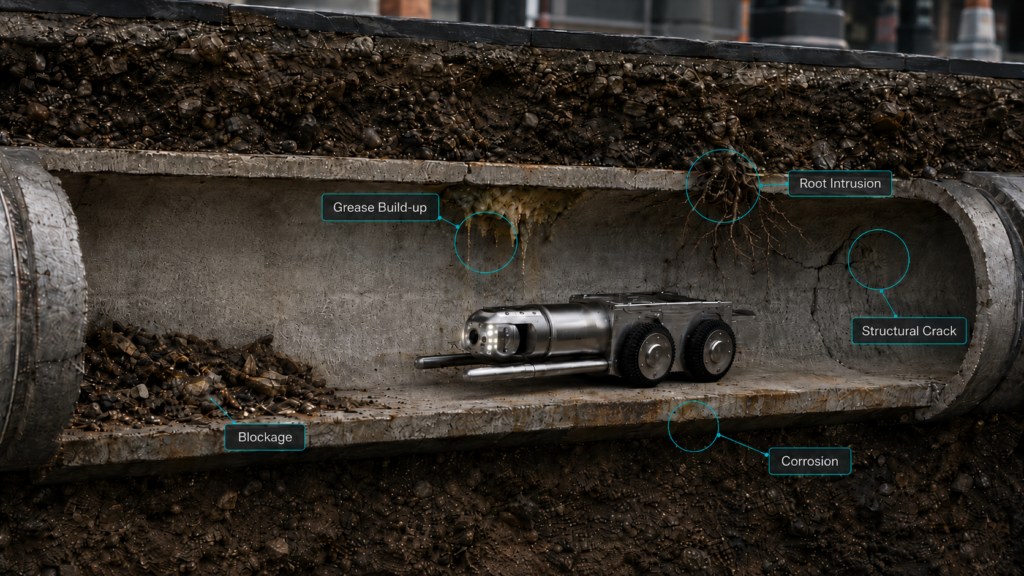
Sewer pipelines
Sewer systems are typically non-pressurized and hazardous for manual entry due to toxic gases, confined spaces, and poor visibility. Traditional inspection approaches are often unsafe and inefficient.
Common issues: Blockages, grease, root intrusion, corrosion, structural cracks, and illegal connections. Sewers are usually non-pressurized and hazardous for manual entry (toxic gases, confined spaces, poor visibility).
Water distribution pipelines
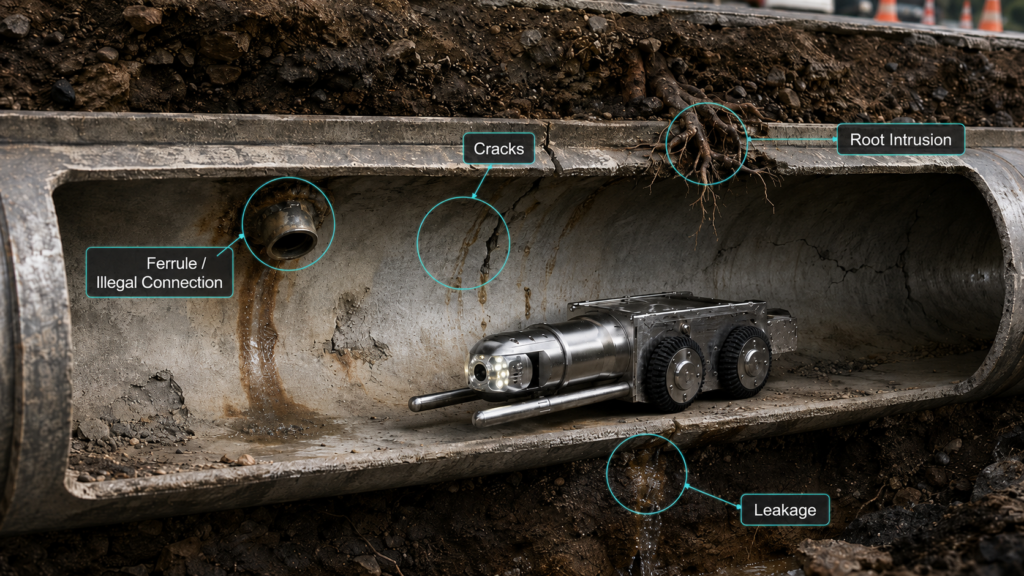
Because these systems are pressurized and often need to remain operational during inspection, shutting them down frequently is both expensive and disruptive to public services.
Common issues: Leaks, pressure loss, joint failures, internal corrosion, sediment buildup, and illegal connections. Water networks are pressurized and often must stay live during inspection; frequent shutdowns are expensive and disruptive.
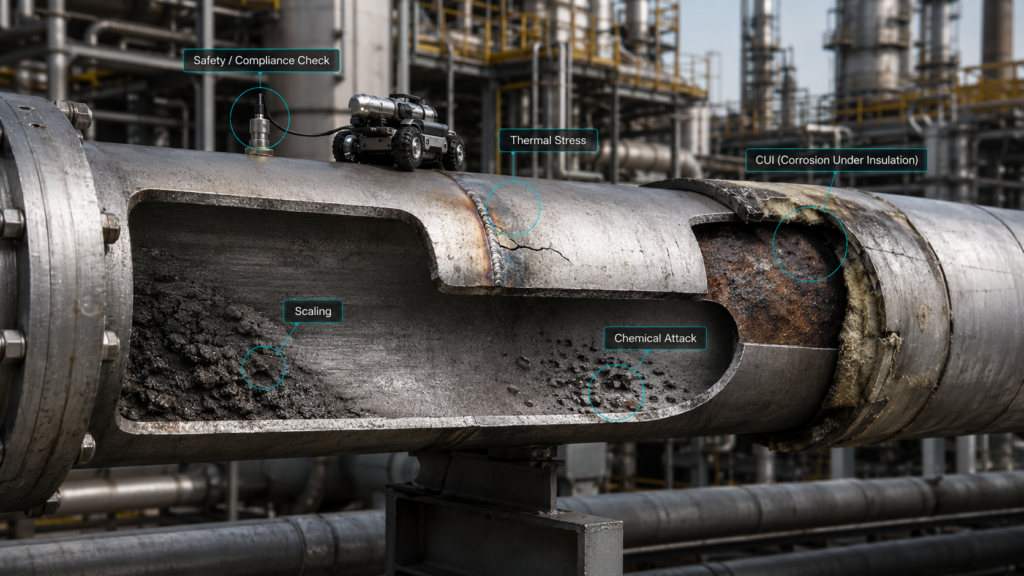
Industrial pipelines
In industries such as oil & gas, power, chemicals, and manufacturing, even short periods of downtime can result in major operational losses.
Common Issues:
Thermal stress, chemical attack, scaling, corrosion under insulation (CUI) and safety/compliance checks. Industrial sites require fast, accurate, minimally invasive methods because downtime costs are high
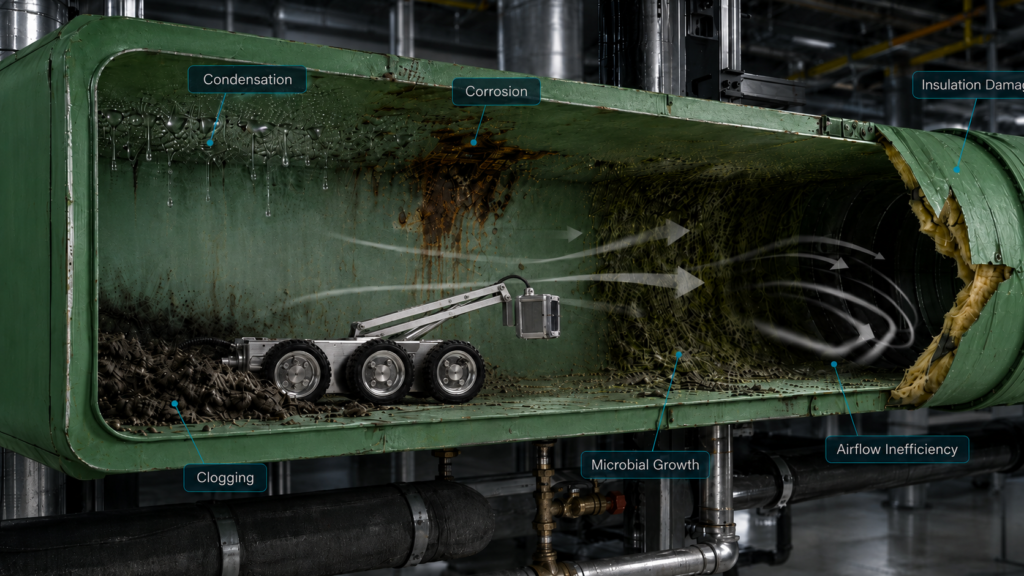
HVAC Pipelines
Poorly maintained HVAC piping can reduce energy efficiency and affect indoor air quality in commercial buildings, hospitals, airports, and industrial facilities.
Common issues:
HVAC (Heating, Ventilation, and Air Conditioning) pipelines and duct systems often face issues such as condensation buildup, internal corrosion, clogging, microbial growth, insulation damage, and airflow inefficiencies.
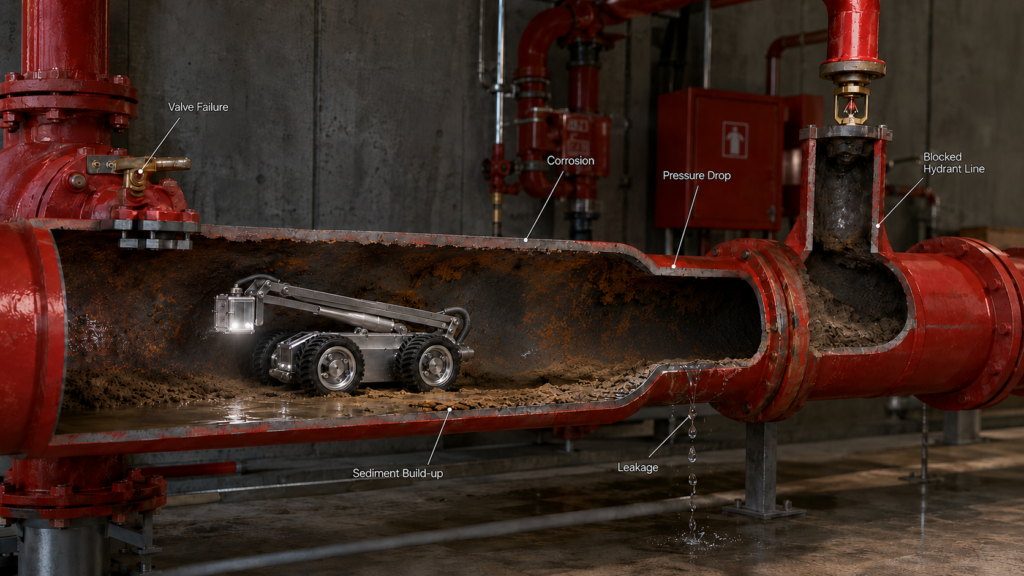
Fire Hydrant and Sprinklers
Fire protection systems require high reliability because failures directly impact emergency response capabilities.
Common issues: Common problems include valve failures, corrosion, sediment accumulation, pressure drops, leakage, and blocked hydrant lines. Since these systems are critical infrastructure, regular inspection is essential to ensure operational readiness.
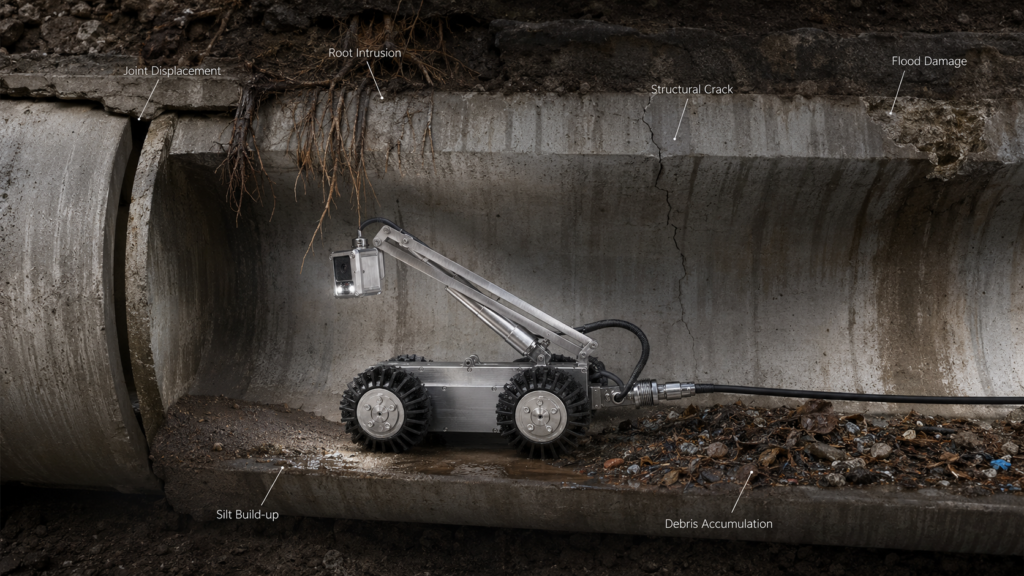
Stormwater Pipelines
During heavy rainfall, undetected defects can lead to urban flooding, road damage, and environmental contamination.
Common issues: Silt buildup, debris accumulation, flooding-related damage, joint displacement, structural cracks, and root intrusion.
Common Pipeline Inspection Methods – When Should You Use Each?
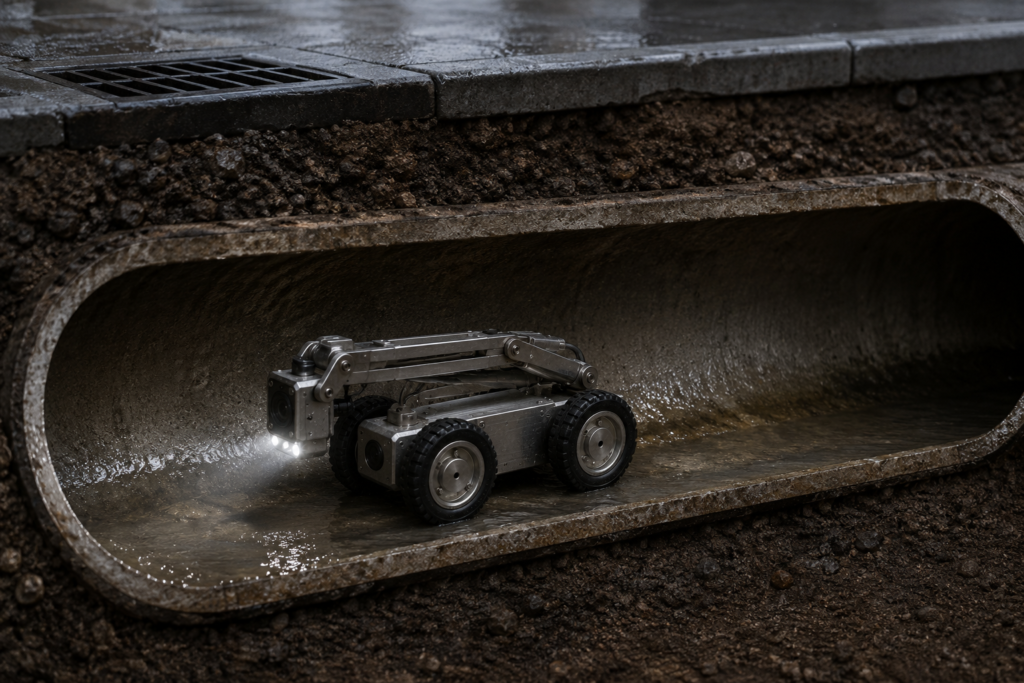
Robotic In-Pipe Inspection
These robotic pipeline inspection systems capture real-time visual and sensor data while improving worker safety, inspection coverage, and pipeline condition assessment accuracy.
Best suited for:
- Live sewer systems
- Pressurized water pipelines
- Hazardous environments
- Long-distance inspection
Robotic inspection systems provide higher coverage, better maneuverability, and significantly improved worker safety.
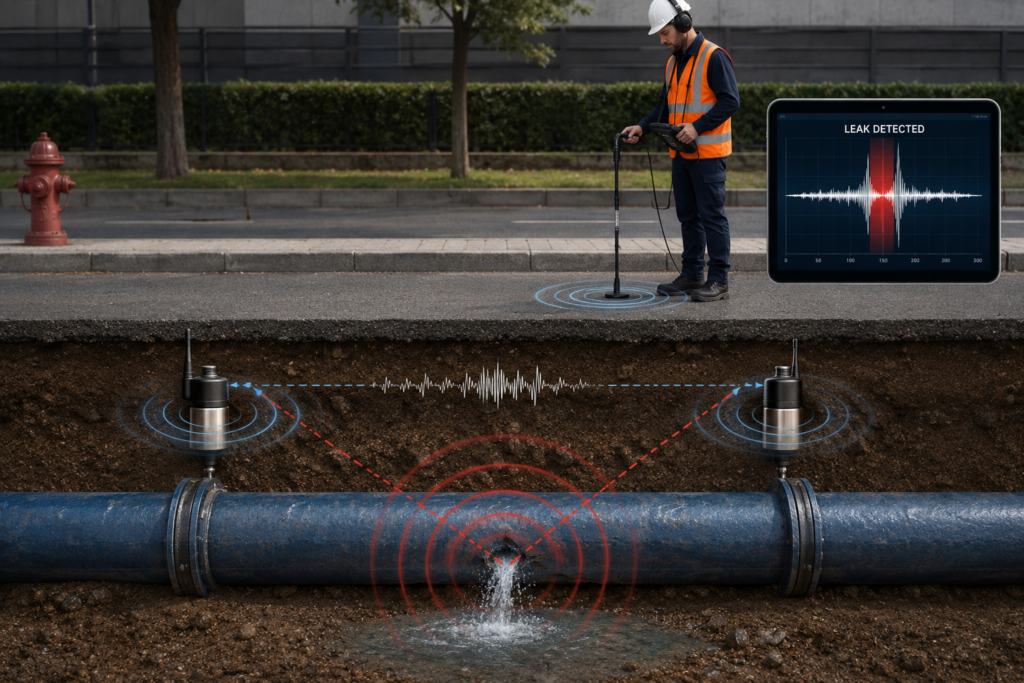
Acoustic Leak Detection
Acoustic leak detection is widely used in water pipeline inspection to identify hidden leaks in pressurized pipelines and buried water mains. By analyzing leak-generated sound frequencies, acoustic leak detection systems help utilities reduce non-revenue water (NRW).
Best suited for:
- Pressurized water distribution networks
- Buried water mains
- Leak localization over long distances
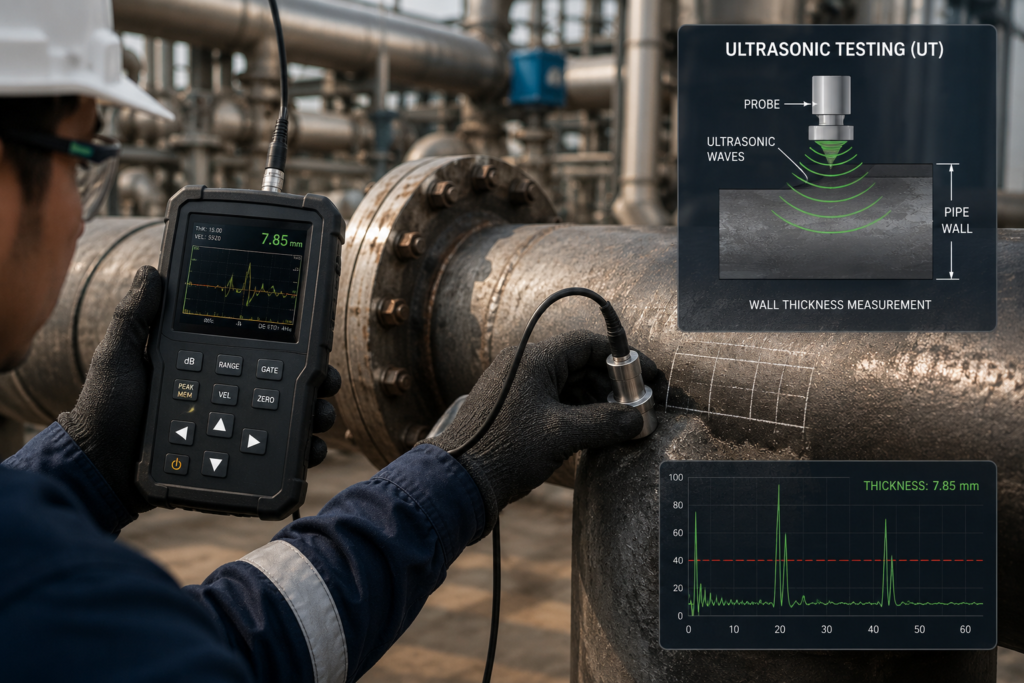
Ultrasonic Testing (UT)
In pipeline inspection, ultrasonic sensors send sound waves through the pipe wall. When the waves encounter changes in thickness, cracks, corrosion, or material defects, they reflect back to the sensor.
Best suited for:
- Industrial pipelines
- Corrosion assessment
- Wall thickness measurement
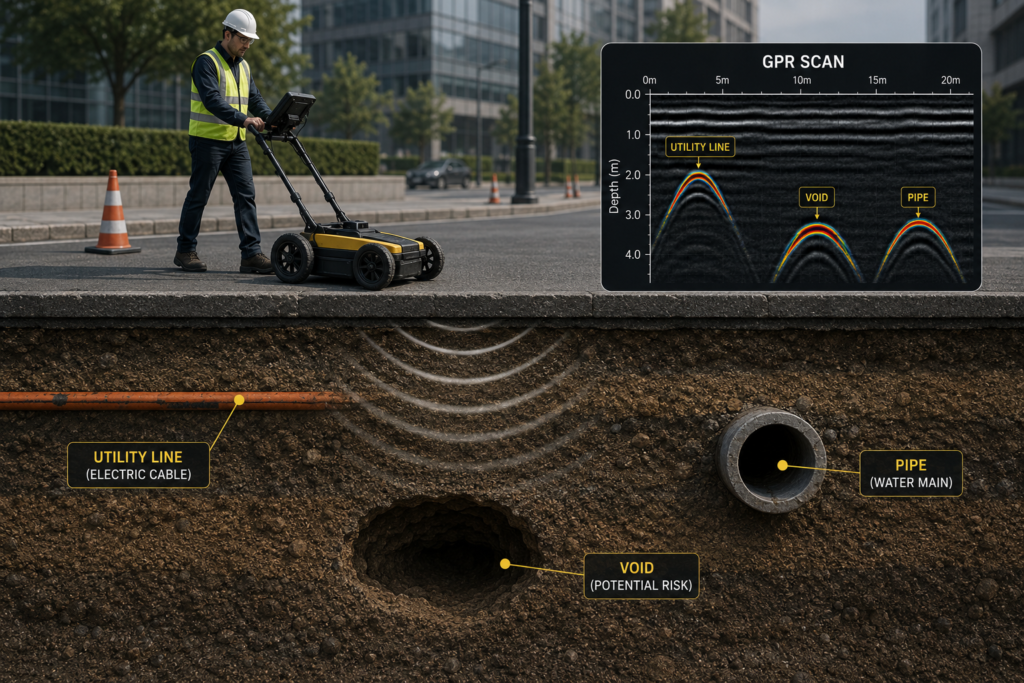
Ground Penetrating Radar (GPR)
Ground Penetrating Radar (GPR) is a non-destructive inspection technology used to detect and map underground pipelines and identify hidden defects without excavation.
GPR helps reduce excavation risks by identifying underground anomalies before physical intervention begins.
Best suited for:
- Utility locating
- Detecting underground voids
- Pre-excavation assessment
- Buried infrastructure mapping
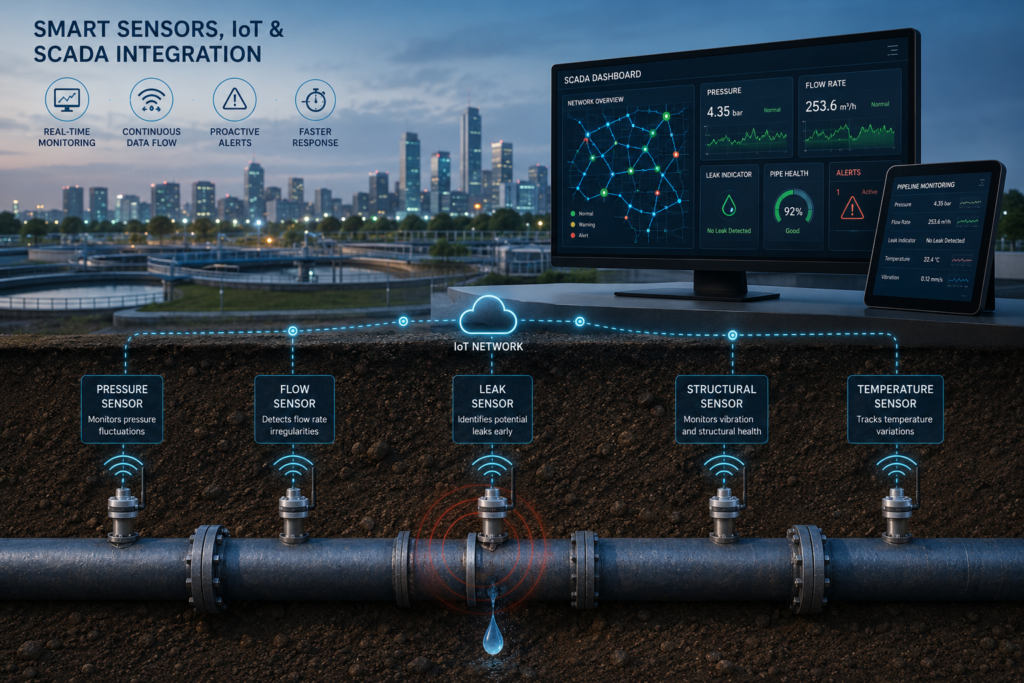
Smart Sensors, IoT & SCADA Integration
Smart sensors, IoT-enabled monitoring systems, and SCADA integration provide continuous real-time pipeline monitoring across critical infrastructure networks. These technologies help detect pressure fluctuations, leak indicators, flow irregularities, and structural anomalies, enabling predictive maintenance and faster operational response.
Best suited for:
- Critical infrastructure networks
- Continuous monitoring applications
- High-risk pipeline segments
Combined with SCADA systems and analytics platforms, these technologies enable proactive monitoring and faster response.
To learn more about how Robotics, AI, SONAR & GPR Are Redefining Pipeline Management
Click HereList of Emerging technologies in proactive pipeline Inspection
Pipeline inspection is evolving rapidly with advancements in robotics, AI, and real-time analytics.
Robotics & Autonomous Crawlers
Modern robotic systems can navigate confined, hazardous, and inaccessible environments while carrying multiple inspection sensors.
AI-Assisted Defect Detection
AI-powered analytics reduce manual review time, improve defect classification accuracy, and help utilities prioritize repairs more efficiently.
Predictive Maintenance
Predictive analytics combine inspection data, sensor streams, and operational history to forecast potential failures before they occur.
Real-Time Monitoring
IoT-enabled systems and edge computing now allow continuous monitoring of critical pipeline infrastructure with faster alerts and decision-making.
How to Evaluate Pipeline Inspection Vendors & Technologies?
Choosing the right inspection technology is important but selecting the right implementation partner matters equally.
Before deploying any inspection solution, utilities and industries should evaluate:
- Relevant Experience – Ask for case studies related to your specific pipeline type and operational environment.
- Regulatory & Safety Compliance – Ensure the vendor follows industry standards and safety requirements.
- Relevant Experience – Ask for case studies related to your specific pipeline type and operational environment.
Quality of Data Output
Verify whether outputs include:
- Video reports
- Defect measurements
- GIS-ready formats
- Digital condition assessment reports
Integration Capability
Inspection data should integrate seamlessly with existing asset management systems and operational workflows.
Pilot Deployments
Before large-scale implementation, conduct pilot inspections on representative pipeline sections to validate performance and suitability.
Every pipeline inspection method comes with its own practical challenges in the field, challenges that are often understood only through real operational experience.
The right inspection approach depends on factors such as pipeline type, accessibility, operating conditions, risk level, and maintenance objectives.
Consulting experienced inspection specialists helps utilities identify the most effective and practical solution for their infrastructure.