
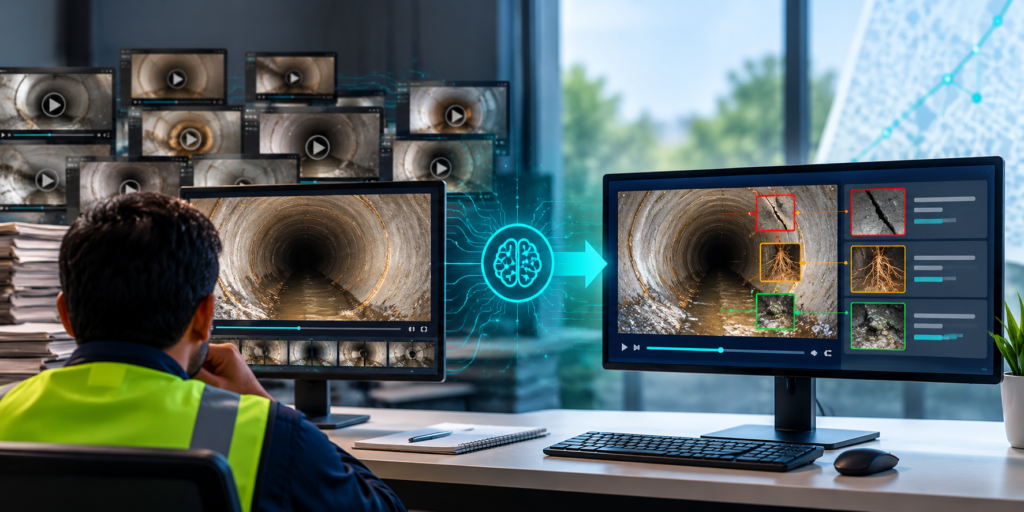
A CCTV pipeline inspection can generate hours of footage in a single day. With multiple inspection crews working across sewer and stormwater networks, the volume of recorded footage can quickly add up.
But completing the inspection is only half the job.
Someone still needs to review the footage, identify defects, classify observations, assess their severity, and prepare reports.
This is where AI-powered CCTV inspection software can make a difference.
By assisting with footage analysis, defect identification, and reporting, the software helps reviewers spend less time searching through videos and more time understanding pipeline conditions.
Why CCTV Pipeline Inspection Reviews Take So Much Time?
For many inspection contractors, collecting footage is relatively straightforward. The challenge begins when that footage needs to be reviewed and converted into usable information.
Consider a contractor operating several CCTV inspection crews across different locations. Each crew may record hours of footage daily, while a smaller team handles reviewing and reporting.
Reviewers must identify defects, locate observations, classify findings, capture supporting images, and verify inspection records.
When new footage arrives faster than it can be reviewed, CCTV inspection backlogs grow.
The pipeline may have been inspected days earlier, but its actual condition is still waiting to be understood.
How AI CCTV Inspection Software Reduces Review Time?
Traditional CCTV review relies heavily on manually examining footage to identify and record defects.
AI CCTV inspection software introduces an assisted workflow where video analysis helps identify potential observations before they are verified by a reviewer.
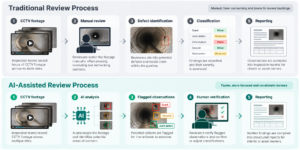
This approach doesn’t eliminate experienced reviewers. Instead, it helps them focus on observations requiring further examination.
1. Automated CCTV Footage Analysis
In conventional reviews, someone may need to watch long sections of footage to locate relatively few defects.
CCTV footage analysis software can process recordings and highlight potential areas of concern.
Rather than continuously searching through videos, reviewers can examine flagged observations and return to relevant footage when necessary.
This is particularly useful for contractors managing large inspection programmes or utilities receiving footage from multiple service providers.
2. AI-Assisted Defect Detection and Classification
Identifying a defect is only part of the process. Reviewers must also understand its type and potential impact on pipeline condition.
Depending on the application and footage quality, automated defect detection can help identify potential cracks, joint defects, deformation, deposits, and obstructions.
AI-assisted classification helps organise these findings into structured inspection information, reducing repetitive manual identification and data entry.
3. Human Verification and Quality Control
AI-assisted analysis should support technical judgement, not replace it.
Pipeline footage is rarely perfect. Sediment can obscure damage, deposits may resemble structural changes, and camera movement can make observations difficult to interpret.
A reliable workflow should allow reviewers to examine original footage, verify detected observations, and correct classifications when necessary.
The value of AI is not in removing the reviewer. It is in helping the reviewer reach important information more efficiently.
4. Structured CCTV Inspection Reporting
Reviewing footage is only one stage. Findings must also become reports that engineers, contractors, and asset managers can use.
Without a structured workflow, observations may need to be transferred manually between videos, spreadsheets, images, and reporting documents.
Pipeline inspection software can help organise defect observations, classifications, supporting images, and inspection details.
This makes findings easier to verify and communicate while supporting greater consistency across projects.
From CCTV Footage to Actionable Pipeline Condition Data
Reducing review time has limited value if the information cannot support maintenance decisions.
A CCTV inspection report should help asset managers understand pipeline conditions, identified defects, and sections requiring attention.
Once observations are reviewed and classified, the information can support pipeline condition assessment, severity evaluation, and maintenance prioritisation.
For instance,
A utility reviewing several kilometres of sewer footage may identify sections with structural damage or recurring obstructions.
Rather than treating every inspected pipeline equally, maintenance teams can use these findings alongside other asset information to determine where further investigation or repairs are needed.
This connects inspection activities with practical infrastructure management.
Benefits for Pipeline Inspection Contractors and Utilities
Although contractors and utilities work with similar inspection information, their operational priorities differ.
For Pipeline Inspection Contractors
AI-assisted review can help contractors:
- Process increasing volumes of CCTV footage.
- Reduce repetitive manual defect searches.
- Organise observations consistently.
- Support timely reporting and client submissions.
- Manage larger inspection programmes more efficiently.
For Utilities and Asset Owners
Utilities need reliable condition information rather than footage alone.
An efficient review workflow can help them:
- Access verified inspection findings sooner.
- Maintain structured pipeline condition records.
- Identify defects requiring further assessment.
- Support maintenance and rehabilitation planning.
Ultimately, faster access to reviewed findings can shorten the gap between inspection and informed decisions.
Can AI Software Analyse Existing CCTV Inspection Footage?
Many utilities and contractors already have CCTV footage collected during previous surveys, sometimes using different camera systems or service providers.
Where compatible video and inspection data formats are supported, CCTV footage analysis software can process existing or third-party recordings without requiring another inspection solely for software analysis.
This can help organisations revisit older surveys, assess previously unreviewed footage, and organise historical inspection records.
However, buyers should verify compatibility with their existing footage formats, data requirements, and reporting workflows before selecting a platform.
How Swasth AI Supports CCTV Footage Analysis?
Swasth AI is Solinas’ AI-powered platform for converting underground pipeline inspection data into actionable condition information.
It supports AI-assisted defect identification, classification, condition assessment, and structured reporting.
For utilities, inspection contractors, and infrastructure managers, this helps organise inspection findings and identify pipeline sections requiring attention.
Swasth AI also supports the digitisation of underground pipeline infrastructure across water, sewer, and stormwater networks.
Key Takaways
CCTV footage collection is only the first step. The real value comes from identifying defects and converting inspection footage into actionable condition information.
Manual review can create inspection backlogs. As footage volumes increase, reviewing, classifying, and reporting defects becomes more time-consuming.
AI-powered CCTV inspection software helps streamline reviews. Automated defect detection allows reviewers to focus on flagged observations rather than searching through hours of footage.
Human verification remains essential. AI-assisted findings should be reviewed to maintain accuracy and consistency.
Structured reporting supports better decisions. Verified inspection findings help utilities and contractors prioritise maintenance and rehabilitation activities.