
Insights From Solinas
Cracks, root intrusions, and damaged joints can show up in sewer pipelines long before you notice anything above ground. That’s the tricky part for utilities; they’re managing stuff you can’t easily see. CCTV inspection lets crews check out the inside of pipes without tearing up streets. But just recording footage isn’t enough. Someone still has to sit down, watch hours of video, spot problems, and decide what to fix.
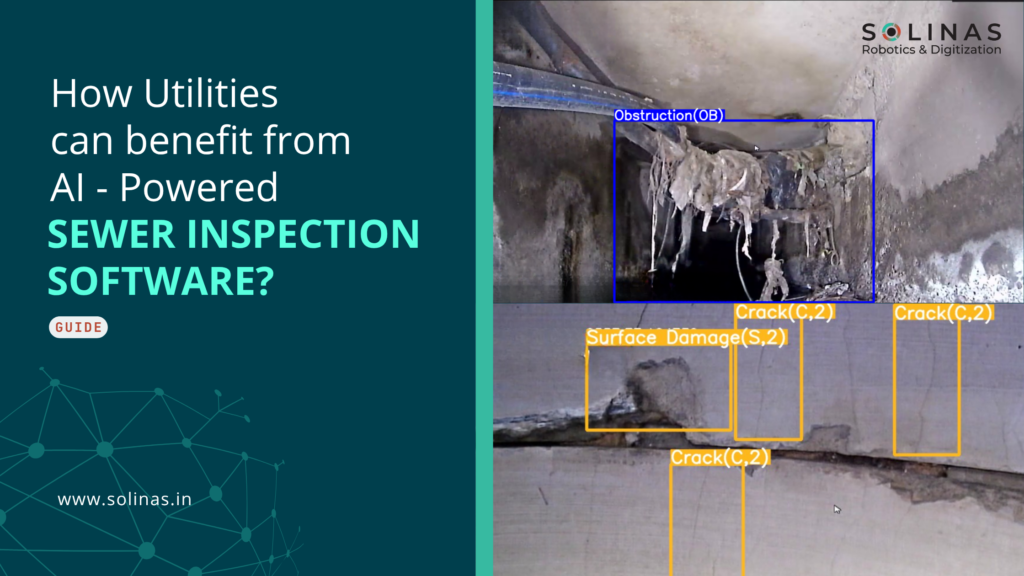
AI sewer inspection software changes the game. It takes endless footage and pulls out the key findings so inspectors can double-check everything and managers have clear info at their fingertips.
How does AI sewer inspection software helps utilities?
- It speeds up reviews by flagging potential issues in footage.
- Inspectors get help spotting and categorizing defects.
- Findings get sorted by defect type, location, and severity for clearer assessments.
- Maintenance planning improves because you actually know what needs cleaning, repair, or replacement.
- Inspection results link up with GIS maps and structured reports for easier tracking.
Why do utilities need AI for sewer inspection?
Imagine a utility dealing with repeated blockages. They send out teams and get hours of CCTV video back. Now, inspectors have to comb through all of it looking for cracks, roots, deposits you name it. Multiply that by miles of pipe and several teams, and it adds up fast.
Manual review matters, but it takes forever and depends on who does it. AI-assisted inspection gives everyone a solid starting point, but experienced inspectors still review and confirm major findings.
5 Benefits of AI Sewer Inspection Software for Utilities:
1. Review CCTV Footage Faster
If you’ve ever watched sewer footage, you know it’s tedious waiting for something worth noting. AI scans the video, flags likely defects, and lets inspectors focus on what’s important. They still have to confirm everything, but it saves a tonne of time, especially for big inspection projects.
2. More Consistent Defect Detection
Two inspectors might describe the same crack differently, especially if the footage isn’t clear. AI helps standardise defect spotting and classification of cracks, joint issues, roots, sediment, and blockages. If multiple contractors work on the same system, AI helps make their reports comparable. Of course, AI isn’t perfect; odd deposits, blurry images, or unusual damage still need human judgment.
3. See the Whole Pipeline Condition
Spotting a crack is easy. Figuring out what it means for the whole pipe takes more info. A pipe might have minor deposits in one spot but serious damage in another; they call for different responses. AI organizes findings by type, severity, and location, so engineers know what needs routine maintenance versus urgent action. Severity’s just part of the picture. Criticality and operating conditions matter too. AI helps build that evidence base.
4. Plan Maintenance Based on the Real Condition
Not every defect needs fixing right away. Some pipes just need cleaning; others require a deeper look or rehab. Without good inspection records, utilities just react to complaints or emergencies. That’s not enough. With AI, utilities compare defects and severity across the network. Minor deposits? Schedule cleaning. Serious deterioration? Get engineering reviews faster. It’s smarter asset management using real inspection info to set priorities.
5. Make Inspection Records Easier to Revisit
After a project is done, videos, defect logs, and maps often sit separately and are forgotten. When you need to re-check a pipeline months later, finding the info is a pain. GIS-enabled inspection software connects findings to locations and asset records. Teams pull up earlier results, compare repeated inspections, and spot patterns. That really matters for long-term rehab planning.
Where does AI sewer inspection make a difference?
Depends on the region. In Australia, utilities might fight root intrusions in older mains. South-east Asia deals with infiltration after heavy rain. The Middle East oversees massive urban networks.
But the main question is always, ‘What’s happening inside the pipes, and where should we focus?’
AI helps teams answer that, making findings easier to review, locate, and compare.
How does Swasth AI support sewer inspection?
At Solinas, field experience shapes how we build Swasth AI. We do real-world robotic inspections. Swasth AI combines AI-driven defect spotting, classification, severity grading, GIS mapping, and structured reporting. It helps teams organize inspection footage and gives utilities clear records for maintenance decisions. We’re not replacing inspectors; we’re making their job easier as inspection programs scale up.
Bottom line:
CCTV shows utilities what’s inside their pipes. AI helps them make sense of it.
Faster reviews, consistent defect records, and GIS-linked reports – it’s not just about finding problems.
It’s about knowing what matters most, where the defect is, and how to plan what comes next.