
Insights From Solinas
The Growing Need for Smarter Sewer Maintenance
Across India and many developing nations, municipal corporations face mounting challenges in maintaining aging sewer networks, manholes, septic tanks, and stormwater drainage systems. Rapid urbanization, population growth, and increasing pressure on underground infrastructure have made conventional sewer cleaning methods inefficient, unsafe, and unsustainable.
For decades, cities have relied on manual cleaning practices and conventional equipment to remove sludge, silt, debris, and blockages from sewer systems. However, these methods often expose workers to hazardous conditions, increase operational costs, and fail to provide long-term solutions for sewer maintenance.
As cities move toward smarter and safer sanitation systems, robotic sewer cleaning is emerging as a transformative technology. Municipal corporations are increasingly adopting sewer cleaning robots and manhole cleaning robots to improve worker safety, operational efficiency, and service delivery.
The Problem: Aging Sewer Networks and Rising Maintenance Challenges
Urban sewer systems are critical to public health and environmental sustainability. However, many municipalities struggle with:
- Frequent sewer blockages
- Accumulation of sludge and silt
- Overflowing manholes
- Flooding during monsoon seasons
- Septic tank maintenance challenges
- Worker safety risks
- High operational costs
When sewer networks are not cleaned regularly, they can lead to sewage overflows, road damage, water contamination, foul odors, and disease outbreaks. Municipal corporations are therefore under increasing pressure to improve sewer maintenance practices while ensuring compliance with safety regulations.
Challenges with Traditional Sewer Cleaning Methods
Traditional sewer cleaning methods continue to present significant operational, safety, and efficiency challenges for municipalities and utility operators. From hazardous working conditions to ineffective cleaning and rising maintenance costs, these limitations highlight the need for safer, smarter, and more efficient approaches to sewer maintenance.
1. Worker Safety Risks
One of the biggest concerns in sewer maintenance is worker safety. Sewer environments often contain toxic gases such as methane, hydrogen sulfide, and carbon monoxide. These confined spaces pose serious health hazards and can lead to fatal accidents.
2. Manual Scavenging Concerns
Despite regulatory efforts, manual entry into manholes and septic tanks continues in several regions. Such practices expose workers to hazardous conditions and raise serious social and ethical concerns.
3. Inefficient Cleaning Operations
Traditional cleaning methods may not effectively remove compacted sludge, debris, or solid waste from sewer chambers and manholes. Incomplete cleaning often results in recurring blockages and increased maintenance costs.
4. Limited Visibility
Municipal teams frequently operate without real-time visibility into underground assets. This makes it difficult to assess cleaning effectiveness and identify hidden blockages.
5. Increasing Operational Costs
Repeated cleaning cycles, emergency repairs, and worker safety measures can significantly increase municipal maintenance budgets.
The Solution: Robotic Sewer Cleaning Systems
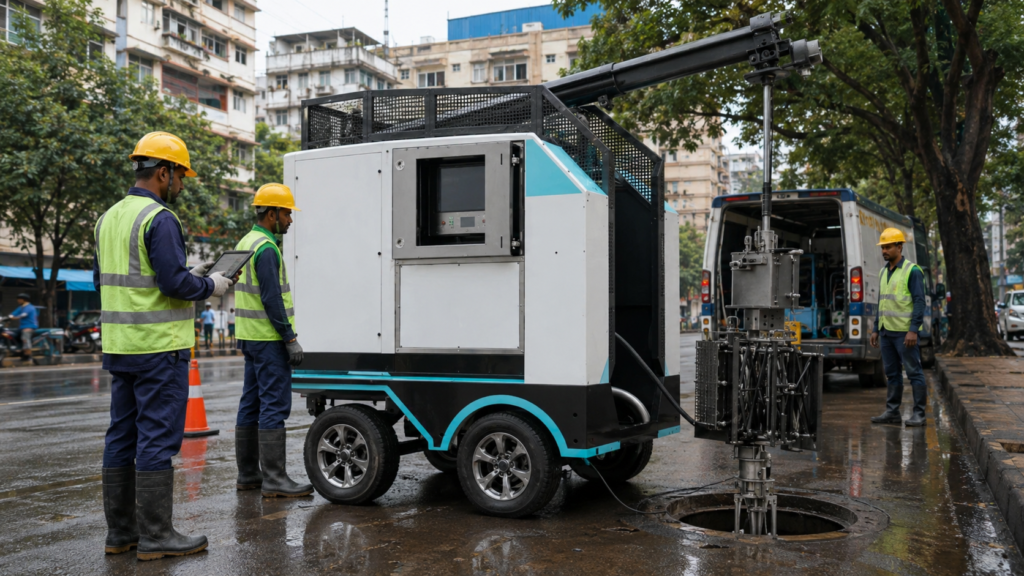
Robotic sewer cleaning systems are designed to address these challenges by enabling safe, efficient, and technology-driven cleaning operations.
A robotic sewer cleaning system typically consists of:
- Remote-controlled robotic units
- High-definition cameras
- Gas detection sensors
- Robotic grabbers and cleaning mechanisms
- Sludge removal tools
- Real-time monitoring systems
Unlike traditional methods, a sewer cleaning robot can perform cleaning operations from the surface without requiring workers to enter hazardous confined spaces.
Robotic manhole cleaning systems can remove sludge, plastic waste, debris, stones, and blockages while providing operators with live visual feedback. This allows municipalities to improve cleaning quality and reduce operational risks.
Benefits of Robotic Sewer Cleaning for Municipal Corporations
Enhanced Worker Safety
The most significant benefit of robotic sewer cleaning is the elimination of direct human exposure to hazardous environments. Workers can operate the system remotely, reducing risks associated with toxic gases and confined spaces.
Support for Eliminating Manual Scavenging
Robotic cleaning technologies help municipalities transition away from unsafe manual cleaning practices by replacing human entry with mechanized operations.
Improved Cleaning Efficiency
Robots can access difficult-to-reach areas and remove accumulated waste more effectively than conventional methods. This results in cleaner sewer networks and reduced blockage frequency.
Reduced Operational Costs
Although robotic systems involve technology investments, municipalities often benefit from lower long-term maintenance costs due to improved cleaning effectiveness and reduced emergency interventions.
Better Asset Management
Integrated cameras and sensors provide valuable data on sewer conditions, helping municipalities make informed maintenance decisions and improve asset management strategies.
Environmental Benefits
Cleaner sewer systems reduce pollution risks, improve wastewater flow, and support sustainable urban sanitation practices.
Case Study: Transforming Sewer Maintenance Through Robotics
A municipal corporation facing recurring sewer blockages and worker safety concerns introduced robotic sewer cleaning technology as part of its sanitation modernization initiative.
Prior to implementation, cleaning operations required multiple workers, significant safety precautions, and frequent repeat visits due to incomplete cleaning. During monsoon periods, sewer overflows often caused public complaints and operational disruptions.
After deploying robotic manhole cleaning systems:
- Cleaning efficiency improved significantly.
- Worker exposure to hazardous environments was reduced.
- Sludge and debris removal became more effective.
- Emergency maintenance requirements decreased.
- Public complaints related to sewer blockages reduced.
- Maintenance teams gained better visibility into underground assets.
The project demonstrated how technology-driven sewer maintenance can improve service delivery while enhancing worker safety and operational sustainability.
The Future of Municipal Sewer Maintenance
As cities continue to expand, the demand for smart and sustainable sanitation infrastructure will only increase. Municipal corporations are increasingly investing in robotic sewer cleaning, digital asset management, and data-driven maintenance strategies to improve urban resilience.
Robotic sewer cleaning is no longer just an innovation; it is becoming an essential component of modern municipal infrastructure management. By combining safety, efficiency, and technology, municipalities can create cleaner, healthier, and more sustainable cities for future generations.
Frequently Asked Questions
What is a robotic sewer cleaning system?
A robotic sewer cleaning system is a remotely operated machine designed to remove sludge, debris, and blockages from sewers, manholes, and septic tanks without requiring human entry into hazardous confined spaces.
How does a manhole cleaning robot work?
A manhole cleaning robot uses cameras, sensors, robotic arms, grabbers, and cleaning tools to remove waste and debris from underground sanitation assets while being controlled remotely by operators from the surface.
Can robotic cleaning eliminate manual scavenging?
Yes. Robotic cleaning systems significantly reduce the need for workers to enter manholes and septic tanks, helping municipalities adopt safer and more humane sanitation practices.
What is the cost of robotic sewer cleaning?
The cost depends on factors such as asset size, cleaning requirements, project scope, location, and deployment model. Municipalities can choose service-based engagements or equipment procurement based on their operational needs.
Can municipalities hire robotic cleaning services instead of purchasing equipment?
Yes. Many technology providers offer robotic sewer cleaning as a service, allowing municipalities to access advanced cleaning solutions without making large capital investments.
How often should sewer networks be cleaned?
Cleaning frequency depends on population density, network conditions, wastewater load, and environmental factors. Municipalities typically conduct routine inspections and preventive cleaning schedules to maintain optimal sewer performance.